Moon Tower Mission Control
Mission operations without the mission-control headache.
Moon Tower connects hardware, telemetry, command, and mission data in one operating environment, from test to field to flight.
Moon Tower Mission Control is the screen your team uses to watch and command its hardware. Moonbeam carries the data. Moon Tower DAQ is the board on your test stand.
One record for the test and the flight.
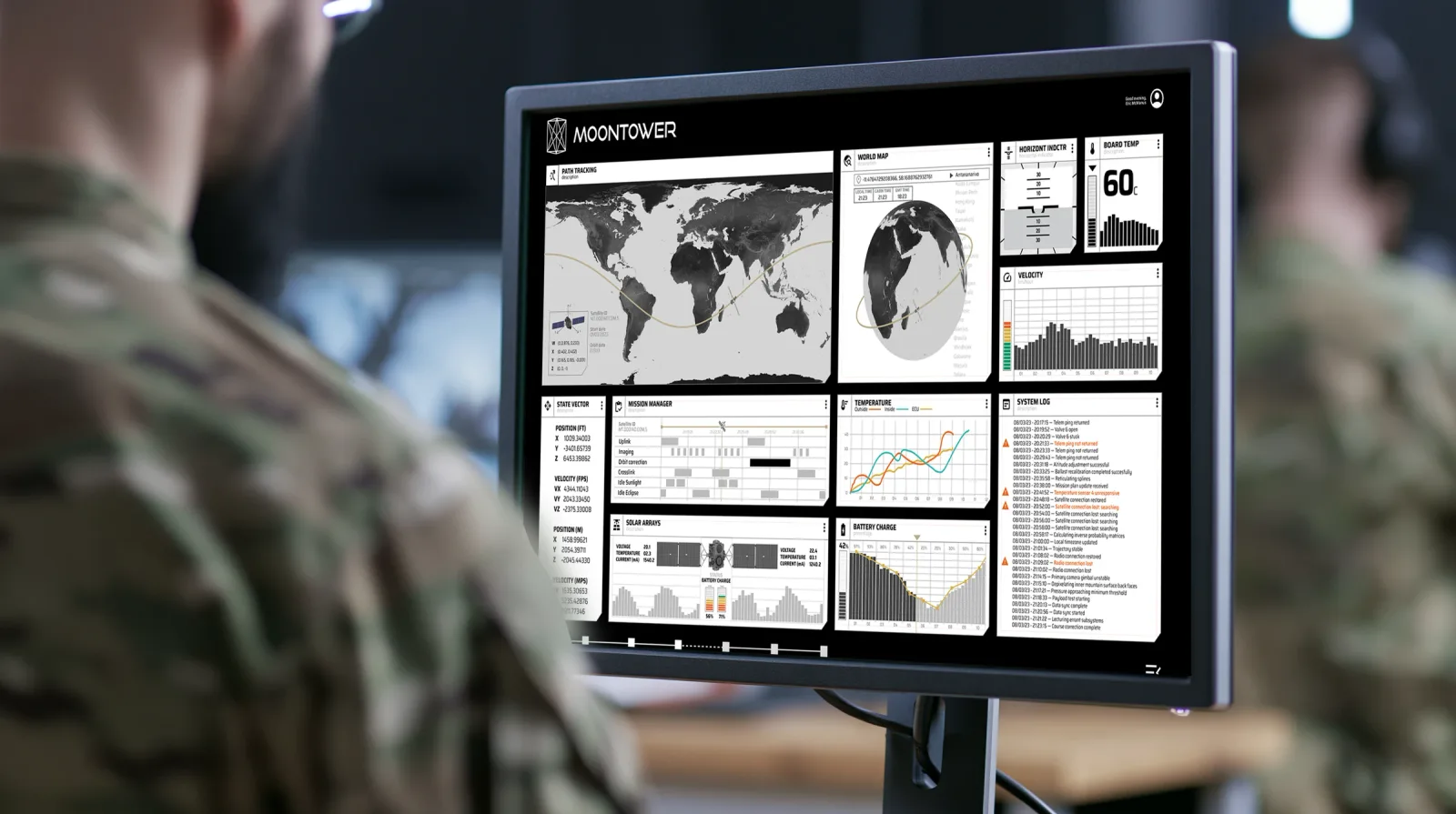
- Monitor
See telemetry, health, and status for every asset.
- Command
Control the hardware from the screen that shows its data.
- Connect
Move the data over the link that holds.
- Test
Capture timestamped data at the stand and drive the valves.
- Integrate
Put a Raspberry Pi, a Pixhawk, or an Arduino on the same screen.
Where it stands
- $389
Moon Tower DAQ kit
- 5
Links that run today
- 3
Boards that report to the screen: Raspberry Pi, Pixhawk, Arduino
- 0
Units shipped to customers

Zed saysZed has enough problems. Your telemetry shouldn't be one of them.
Hot fire day
A student propulsion team runs a hot fire on its own stand. Here is the same day twice.
| Step | Today | With Moon Tower |
|---|---|---|
| Set up the stand | Boards wired into a network by hand. Next year's team starts again from notes. | Boards announce themselves and join the network. Next year's team finds the same boards and files. |
| Run the hot fire | The Wi-Fi fades. Chamber pressure drops out with the slow tank temperatures. | You rank the channels once. Moonbeam moves to LoRa and sends chamber pressure first. |
| Watch the launch | The flight computer, the cameras, and the boards report to separate displays. | A Pixhawk and a Raspberry Pi report to the same screen as the boards. |
| Bring a new stand on line | One to three weeks, with a driver written for each device. | A board appears on the screen with no configuration by hand. |
Table 1. A student team's hot fire, today and with Moon Tower. Source: Moon Tower customer document, 28 September 2026.
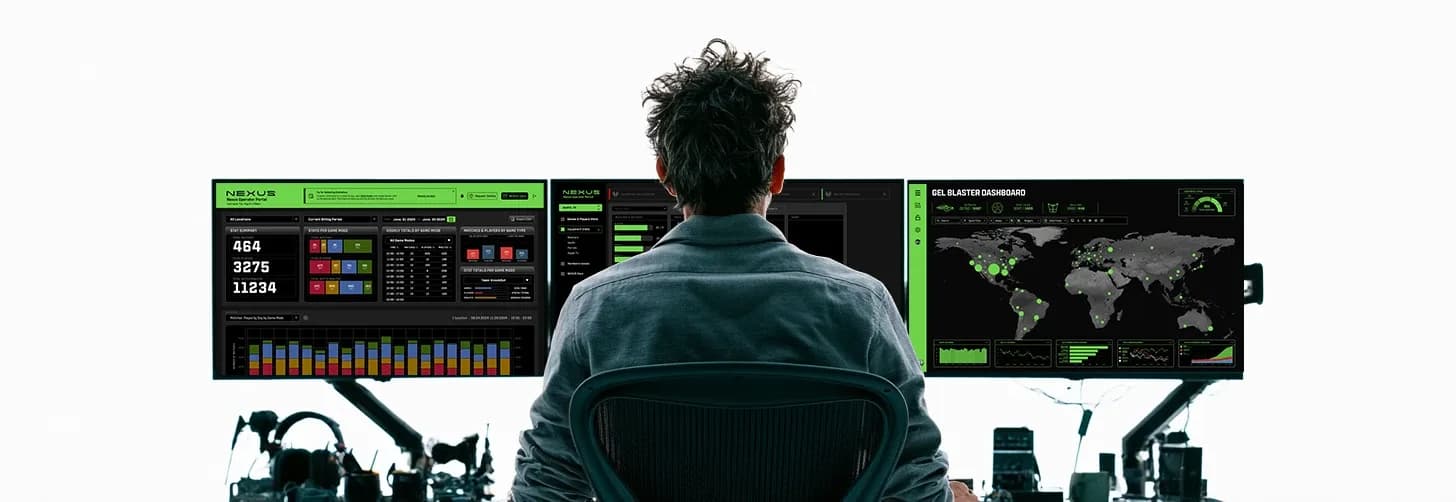
Applications
Build. Test. Launch. Repeat.
Your setup stays on the screen when your members graduate.
Your research should be the hard part.
The grant buys the instruments. Moon Tower puts them on one screen without months of wiring and scripts.
Keep your engineers on your product.
Your engineers work on the vehicle, not on stand drivers.
Your garage just got mission control.
Cameras, rockets, uncrewed boats, and remote stations report their health to one screen.
Architecture: three parts, one screen
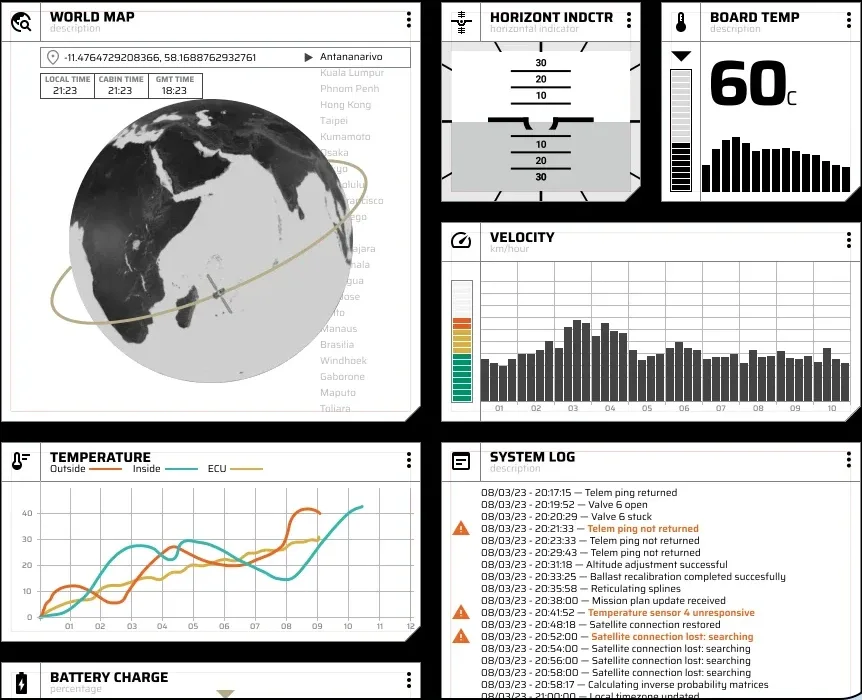

Moon Tower Mission Control
The screen opens on the whole fleet. Each asset shows its status, its health, and its live telemetry. You send commands from the screen that shows the data, and each command waits for a second action. An alert names the asset, the channel, the value, and the time. Every value and every command goes into one recording.
A person or an AI agent can run it. The person uses the screen. The agent uses the API or the MCP server, the standard an AI agent uses to call software tools. Mission Control runs in the cloud or on a laptop. A laptop with no internet link stores the data and uploads it when it next connects.
Moonbeam
Moonbeam carries telemetry down and commands up over Wi-Fi, Ethernet, LTE, 5G, and LoRa. It picks the link by range and signal quality. When a link narrows, it sends your top-ranked channels first. The board stores the full-rate data and sends it when the link returns. Moonbeam also keeps the ground antenna pointed at a moving vehicle.
The Link Pack puts both ends of a LoRa link and a cellular modem in one kit.
Moon Tower DAQ
A data acquisition (DAQ) kit your team assembles, soldering included. It costs $100. It reads pressures, temperatures, and digital lines at the stand, and it drives the relays for your valves. Each reading and each valve command carries a timestamp, so both line up on one time axis.
Specifications
| Input or output | Design value |
|---|---|
| Analog voltage | 0 to 10 V |
| Current loop | 4 to 20 mA |
| Thermocouples | Types K, J, and T, cold junction compensation on the board |
| Actuation outputs | 8, with a defined state at startup and on a fault |
| Sample rate | 1 to 100 Hz for the fleet, 1 to 10 kHz on selected channels |
| Power in | 5 to 24 V |
Table 2. Moon Tower DAQ design values. These are design figures, not test results. Source: Moon Tower product document, 28 September 2026.
Test the way you intend to fly.
The screens, commands, configurations, and recordings from your tests carry into your live operations.
Deployed now
- Moon Tower Mission Control
- Moonbeam over Wi-Fi, Ethernet, LTE, 5G, and LoRa
- Moon Tower DAQ
- The Raspberry Pi, Pixhawk, and Arduino integrations
- The API and the MCP server
On the roadmap
These parts do not run yet. No date is set for any of them.
- Moon Tower Test Range will replay a recording and fork it at a chosen moment, so you can see what a different valve timing would have done.
- A power cycle from the screen will bring back a board whose firmware has locked up. Remote reset runs today.
- A site server install will run Mission Control on your own server with no internet link.
- Exports will write recordings as COSMOS packets, MCAP, and CSV.
- Satellite links will add Starlink, Iridium, and AST SpaceMobile.
Preorder the board
Card payment is not connected yet. Place the preorder with your name and email. We contact you to take payment before the board ships.
Get the test reports by email