IMPRESS penetrator probe In build
Science → mission capability
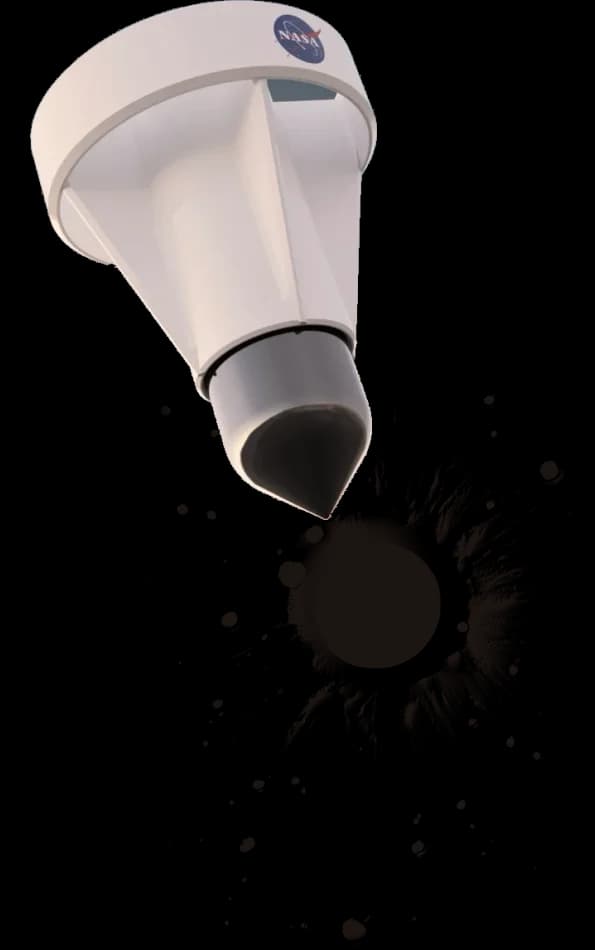
IMPRESS is a probe that buries itself in the ground on impact. It places sensors or a customer payload below the surface of Mars, the Moon, or Earth, and returns the data by radio.
Zed saysDig. Discover. Decide what comes next.
- 0.46 m and 0.6 mDepth reached by an empty probe body in two drone drops
- 1 of 2Aft bodies destroyed on impact in those drops
- −120 dBmReceiver sensitivity at 50 percent packet error
- 16 hBattery life at full transmit rate, on the bench
Before the lander commits
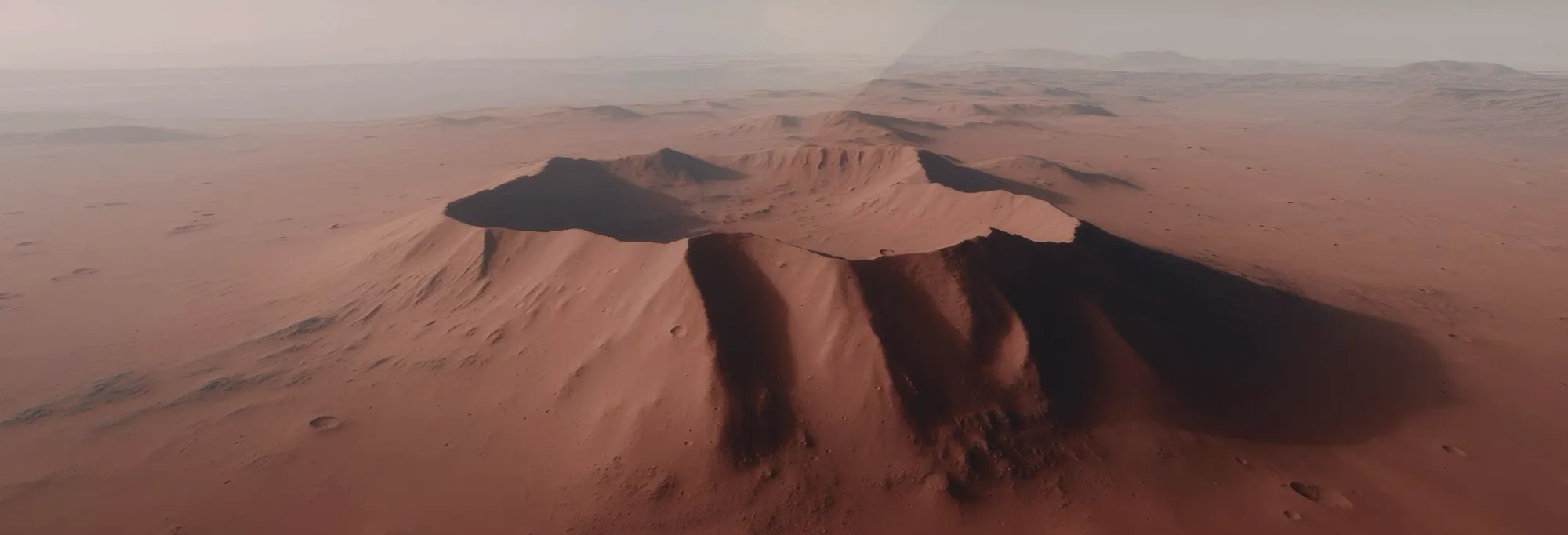
A Mars mission chooses its landing site from orbital images. It has no reading from below the surface before it lands. IMPRESS probes go first.
| Step | Today | With IMPRESS |
|---|---|---|
| Choose the site | Orbital images only. A rover searches the site after landing. | Probes read the soil at many sites. The programme picks the spot from the readings. |
| Measure the geology | Each seismic station is a full lander. InSight put one seismometer at one site. | Each later impact is a seismic source. The probes already in the ground record it. |
| Land | The lander fixes its position from its own sensors. | The lander ranges to the surface nodes on the way down. |
| Return the data | Each asset spends its own power on the long link to an orbiter. | Each asset sends data over a short link to the nearest node. |
Table 1. A Mars lander mission, today and with IMPRESS. Source: IMPRESS customer document, 27 September 2026.
The standard suite, the surface network, and the ranging service are concepts. The table shows what they are designed to do.
Figures from the product document and our own drop and bench tests.
Who flies on IMPRESS
NASA mission programmes
Probes read the soil at many sites before the lander commits, and give the lander a position fix on the way down.
Research nonprofits
A life-detection instrument goes below the surface, out of ultraviolet light, in a probe of its own.
University labs
A lab books a flight before it builds the instrument. Our engineers harden it and drop test it with the lab.
Hazard agencies on Earth
An aircraft or a drone drops seismic probes onto a volcano. No crew goes to the site.
Science backers
One standard-suite probe at a site the backer picks, with its data. No promise of a discovery.
Source: IMPRESS customer document, 27 September 2026.
Payload space
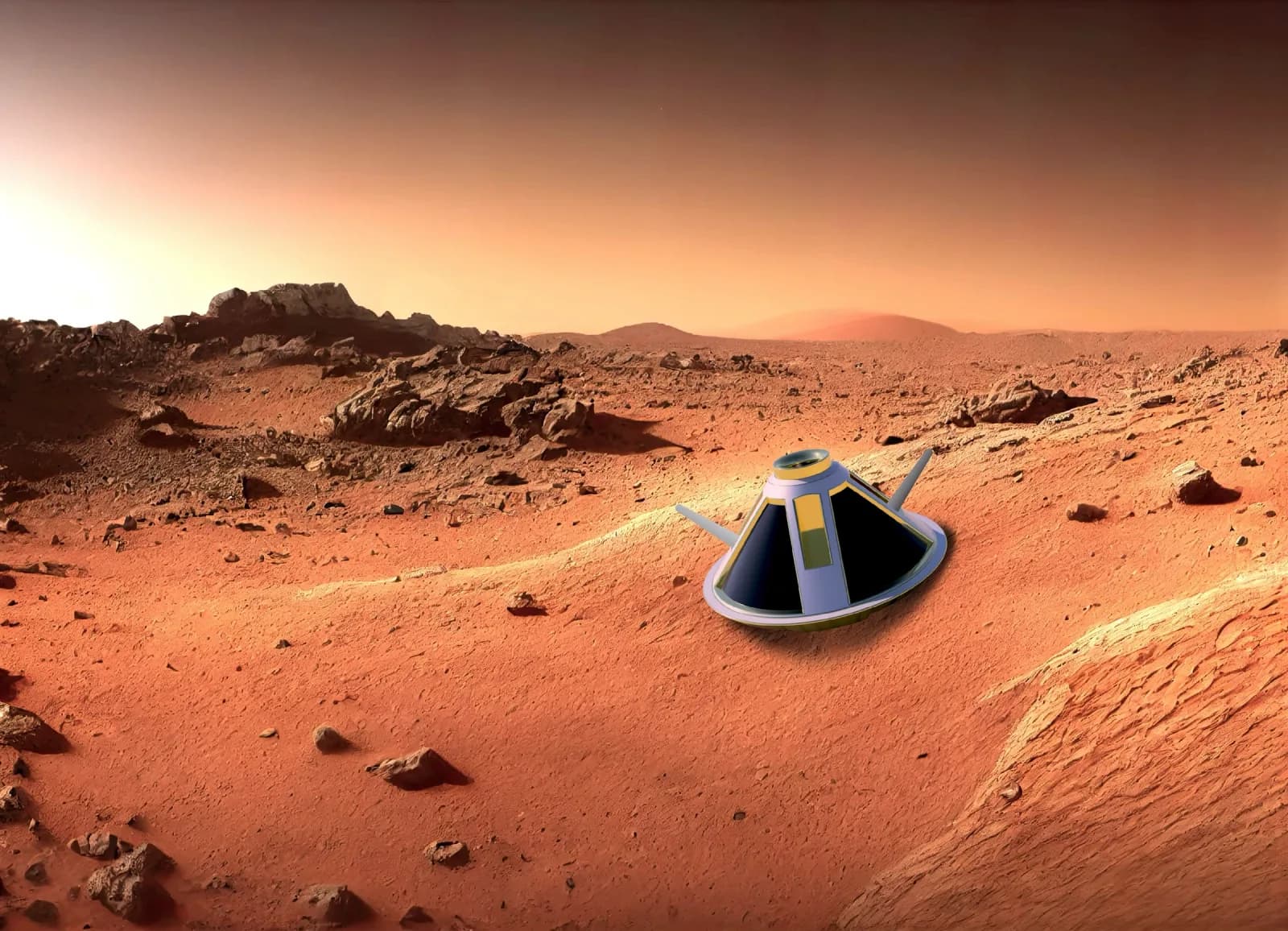
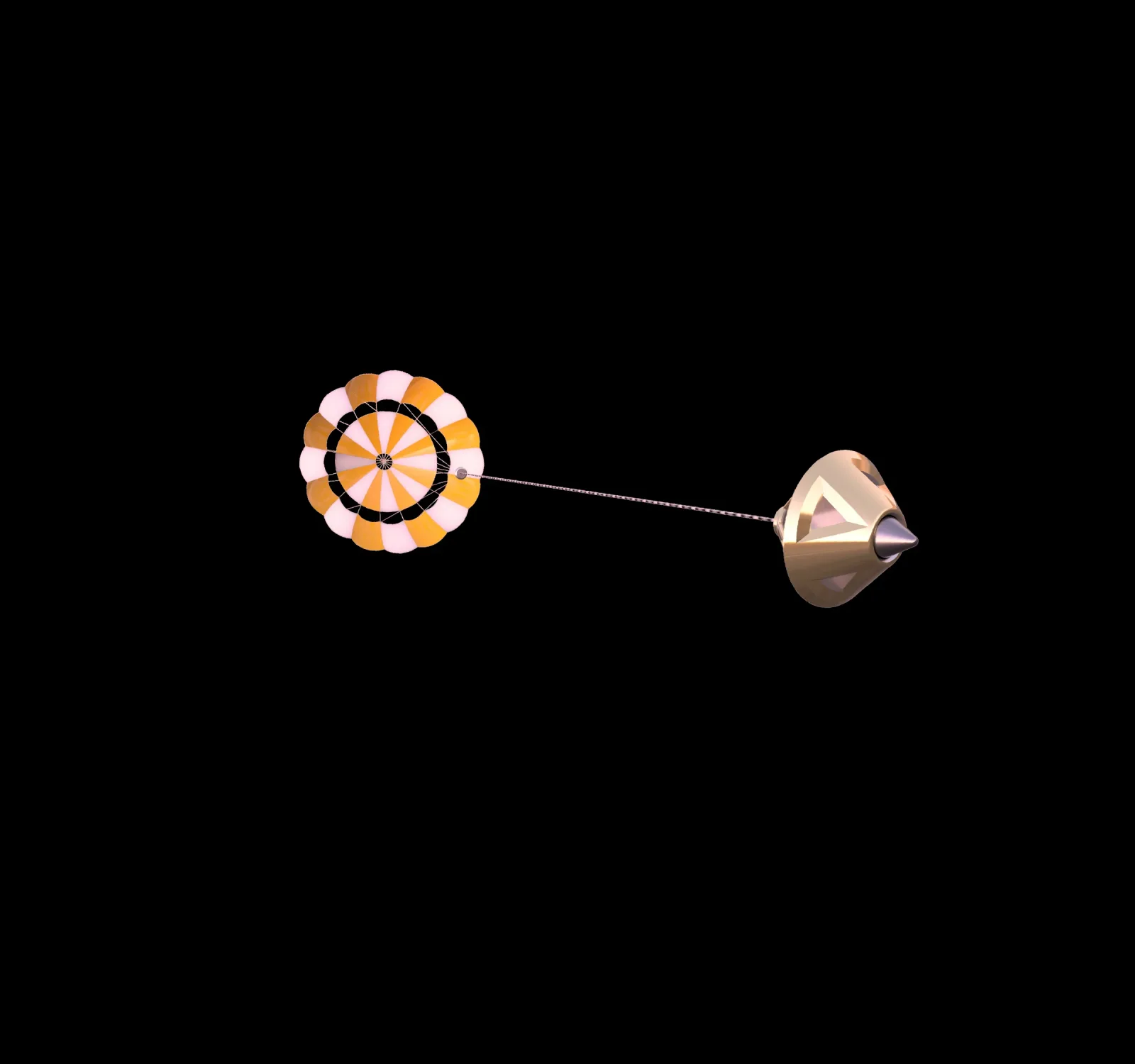
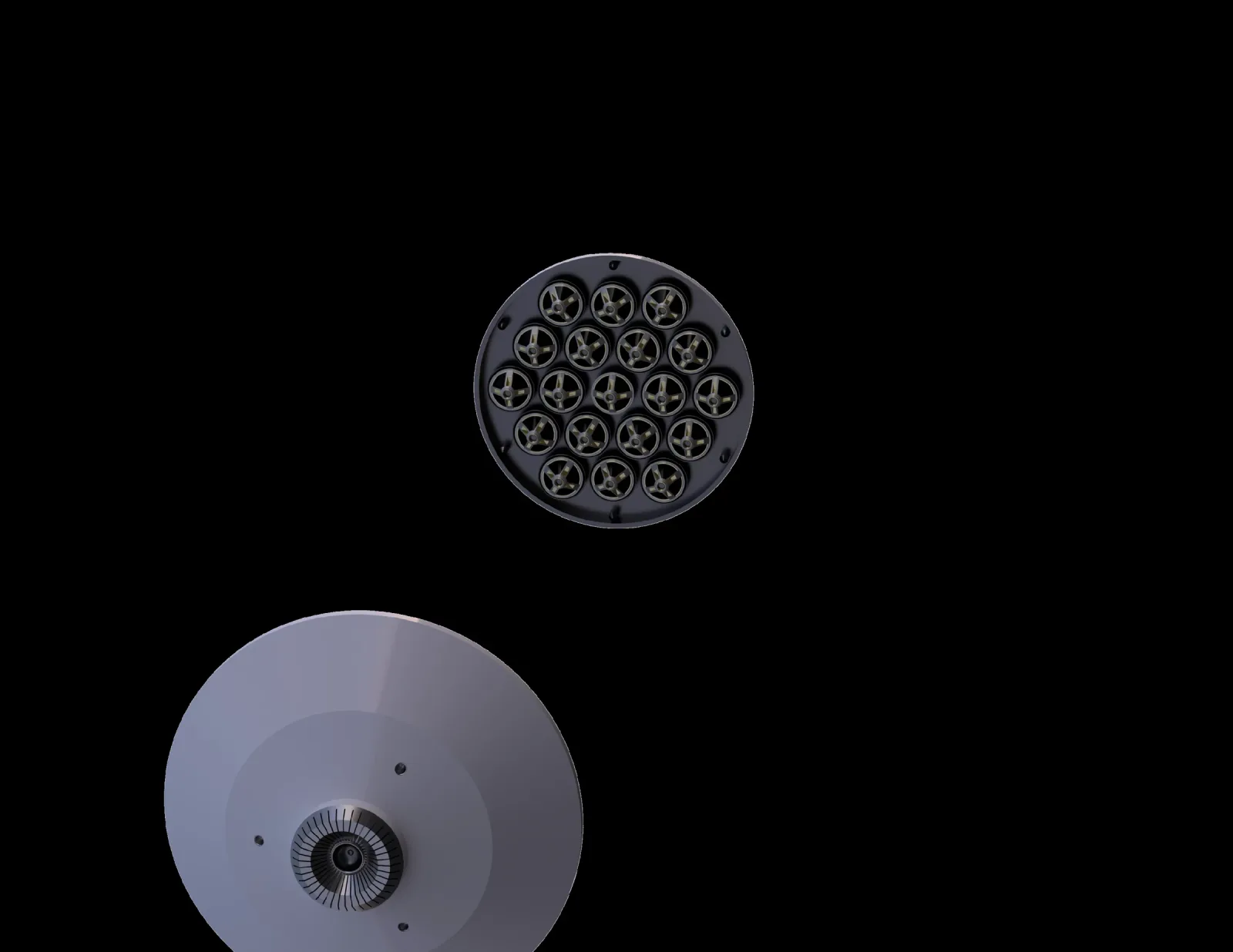
Most probes carry the standard suite: a seismograph, soil and chemical sensors, pressure and temperature sensors, and a camera. A customer can buy the payload space in place of the suite.
| Build-to figure | Value | Status |
|---|---|---|
| Payload space | Cylinder 47 mm across, 50 mm high | Not final |
| Payload mass | 150 g | Target |
| Power to the payload | Up to 3 W | Target |
| Data link | CAN bus | Target |
| Impact on Mars | 320 to 340 m/s, 12,200 to 55,500 g peak | Target |
| Burial depth | 0.2 to 1 m | Target |
| Data return | 400 to 450 MHz, at least 1 kbps | Target |
Table 2. The figures a custom payload is built to. A target is a design figure, not a test result. Source: IMPRESS product document, 27 September 2026.
At booking, the customer receives the payload envelope and the shock figure. Our engineers help harden the payload against the impact. We drop test it on our rig before we accept it. Then our team pots it into the forebody.
How a probe works
- Release.A carrier releases the probes over the site. On Earth, an aircraft or a drone drops them.
- Bury.The steel forebody buries its payload 0.2 to 1 m deep. Epoxy potting protects the electronics from the shock.
- Mark.The aft body separates and stays on the surface, joined to the forebody by a tether.
- Report.The aft body returns the data at 400 to 450 MHz. The customer reads it on the Moon Tower Mission Control screen.
What runs today
| Part | Status |
|---|---|
| Probe radio | Runs |
| Moon Tower Mission Control screen | Runs |
| Direction-finding receiver | Runs |
| Ground units | Built |
| Probe | In build |
| Standard suite, surface network, ranging service, carrier | Concept |
Table 3. IMPRESS parts and their status. Runs means a prototype works in our own tests. No part has shipped. Source: IMPRESS product document, 27 September 2026.
Mars is the first flight target. The Agnostic Life Finding Association (ALFA) pays for the Mars work. NASA funds IMPRESS development through the TechLeap prize programme. The ride to Mars is not chosen, so no flight date is set. Probes dropped on Earth need no ride.
Book payload space
The quote states the price, the payload envelope, the shock figure, and the flight status.